

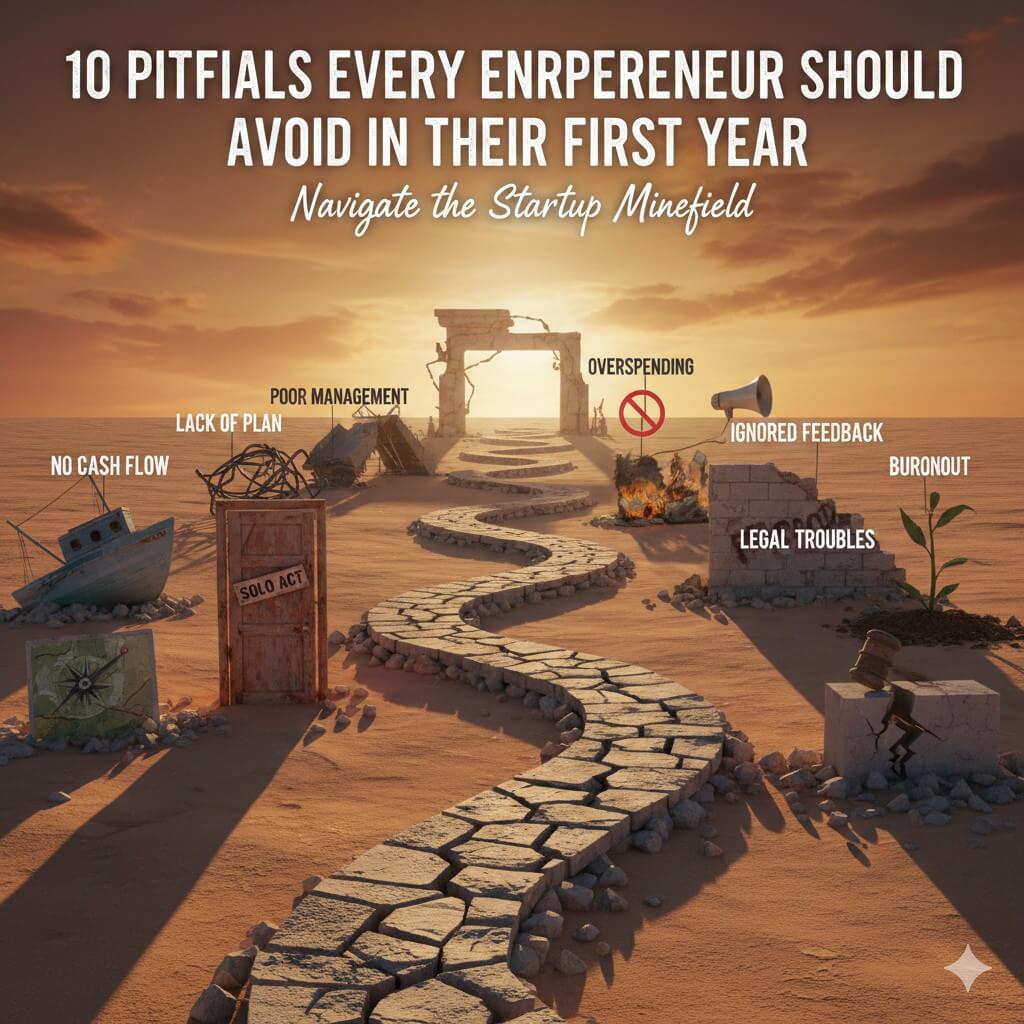
The first year of building a business feels like stepping onto a roller coaster you designed yourself—you’re excited, nervous, and secretly wondering if the bolts will hold. Entrepreneurs often dive in with vision and energy, but the reality of execution can be very different from the dream. The truth? Most startups don’t fail because of a bad idea; they stumble because of avoidable mistakes in the early stages.
If you’re about to take that leap, here are ten pitfalls you should watch out for and, more importantly, how to think about them before they cost you everything.
1. Falling in Love with the Idea, Not the Problem
Many first-time founders are blinded by their “brilliant” idea. The question isn’t whether you love it—it’s whether it solves a problem people are desperate to fix. Businesses grow from customer pain points, not founder passion alone.
2. Underestimating Cash Flow
Revenue on paper isn’t cash in your account. First-year entrepreneurs often spend like they’ve already “made it,” forgetting that late payments, unexpected costs, and lean months are part of the game. Cash flow discipline is survival, not an option.
3. Hiring Too Fast—or Too Cheap
Building a team feels exciting, but hiring without clarity leads to wasted money and friction. On the flip side, trying to save costs with underqualified hires can stall growth. The first hires should be problem-solvers, not placeholders.
4. Chasing Every Opportunity
In year one, everything feels like a potential breakthrough—every client, every collaboration, every pivot. But chasing too many paths spreads your energy thin. Focus doesn’t just build momentum—it builds credibility.
5. Ignoring Legal and Compliance Basics
From incorporation to taxes to contracts, skipping the “boring paperwork” can create landmines later. You don’t need to drown in legal jargon, but you do need to protect your business from day one.
6. Pricing for Survival Instead of Value
Most first-time founders underprice their product out of fear—“if I charge more, no one will buy.” The result? You work harder, earn less, and position yourself as cheap instead of valuable. Pricing should reflect worth, not worry.
7. Neglecting Marketing
“If the product is good, people will find us.” That’s a myth. Without consistent storytelling and visibility, even the best solutions stay invisible. Marketing isn’t fluff—it’s the bridge between your idea and the people who need it.
8. Failing to Listen to Customers
Entrepreneurs sometimes treat feedback as an interruption instead of a compass. Listening doesn’t mean obeying every request—it means decoding what customers actually need, then aligning your product accordingly.
9. Burning Out
The hustle culture glorifies sleepless nights, but exhaustion kills creativity and decision-making. A founder running on fumes isn’t building a company—they’re building a breakdown. Sustainability matters as much as speed.
10. Not Asking for Help
Many founders think asking for guidance makes them look weak. In reality, it accelerates learning and avoids costly mistakes. Mentors, peers, and advisors are not crutches—they’re shortcuts to wisdom.
The first year of entrepreneurship isn’t about perfection—it’s about awareness. If you can spot these pitfalls early, you don’t just survive year one—you build the resilience to thrive beyond it. Remember, the real measure of success isn’t avoiding mistakes altogether—it’s learning fast enough that they don’t repeat.