

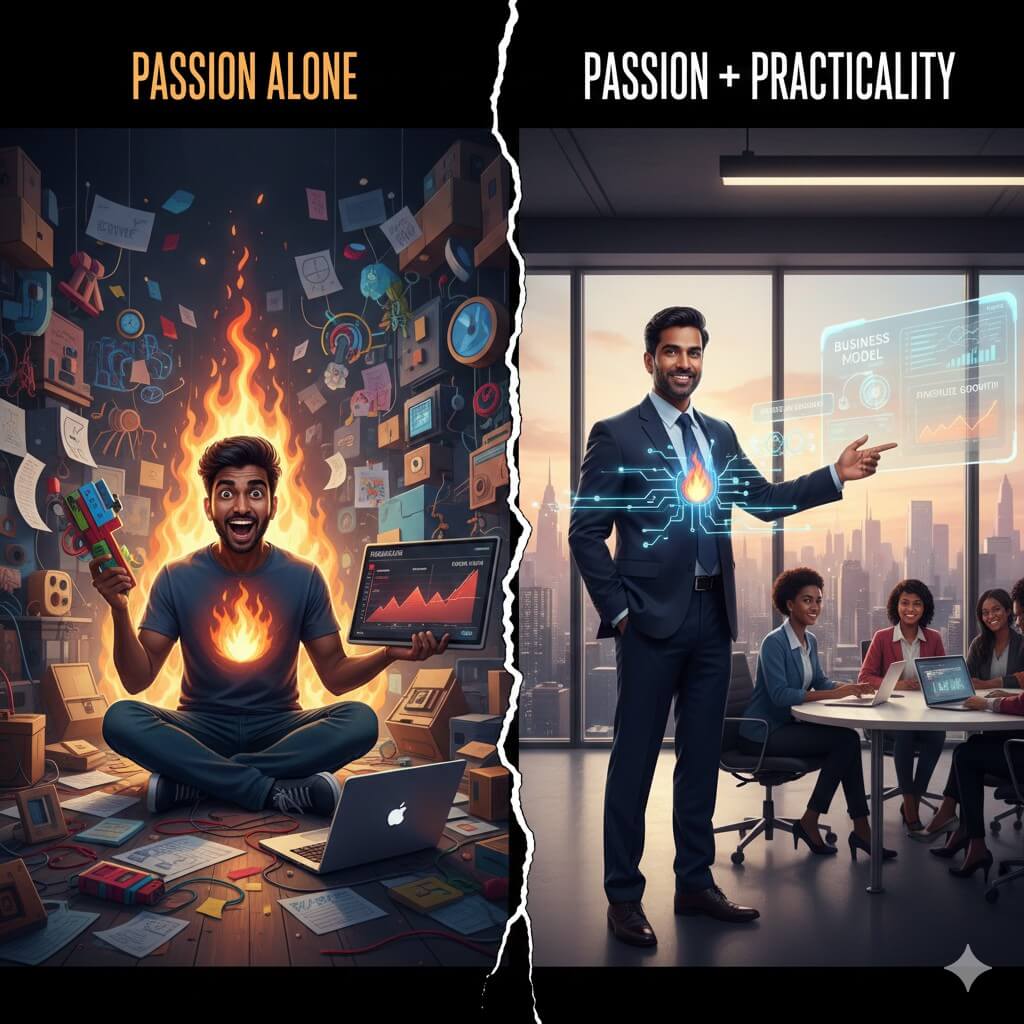
When people talk about entrepreneurship, the word “passion” almost always comes up. We picture founders driven by burning ideas, working day and night to build something new. Passion is often celebrated as the fuel that keeps entrepreneurs going through sleepless nights and tough challenges. But here’s the real question: is passion alone enough for an entrepreneur to succeed? Or does success demand something more than just excitement and enthusiasm?
The Power of Passion
Passion plays a critical role in entrepreneurship. Starting a business is tough—there are endless risks, uncertainty, and constant obstacles. Passion gives entrepreneurs the energy to push through when logic says it’s easier to quit. It inspires creativity, attracts teams, and motivates investors who want to believe in a founder’s vision. Think about Steve Jobs. His passion for design and technology helped create Apple’s culture of innovation. Or Elon Musk, whose passion for space and sustainability drives SpaceX and Tesla. Without passion, it would be impossible to survive the setbacks, failures, and years of hard work that entrepreneurship demands. But while passion is essential, it is not a guarantee of success. Many passionate entrepreneurs fail. Why? Because passion without direction, skill, or strategy can become a trap.
The Limits of Passion
A passionate person may dive headfirst into an idea but overlook whether the idea solves a real problem. They may love what they are building but fail to understand the market, pricing, or scalability. Some may refuse to adapt when customers give negative feedback, holding on to passion as if it were proof they are right. In fact, research shows that over 90% of startups fail, and one of the biggest reasons is not lack of passion but poor business models, financial mismanagement, or ignoring customer needs. Passion alone cannot fix these. Take the example of an entrepreneur who is deeply passionate about handmade crafts. They might start a business selling them but without understanding supply chains, customer demand, or online marketing, the business may never grow. Their passion remains, but the venture struggles.
What Complements Passion?
Clear Vision and Strategy
Passion without a roadmap is just energy without direction. Entrepreneurs need to channel their passion into a clear vision with measurable goals and a strategy to reach them.
Skills and Knowledge
A passionate founder must also develop or hire skills in finance, operations, marketing, and leadership. Building a product is one thing; running a business is another.
Market Awareness
Successful entrepreneurs listen to their customers. They balance passion with practicality by asking: Does this solve a real problem? Will people pay for it?
Adaptability
Passion sometimes makes people stubborn. But the most successful entrepreneurs are flexible, ready to pivot when circumstances demand. Netflix, for example, began as a DVD rental service before transforming into a streaming giant.
Resilience and Discipline
Passion may start the journey, but discipline sustains it. Daily effort, consistent execution, and resilience in the face of rejection are what ultimately turn ideas into businesses.
Passion Plus Practicality: The Winning Formula
Passion is like fire—it can warm, inspire, and drive action. But without proper control, fire can also burn out of control. Similarly, passion must be combined with practicality. Entrepreneurs like Ritesh Agarwal, founder of OYO Rooms, show this balance. His passion for affordable travel met with a deep understanding of the hospitality market, strong execution, and ability to scale. This combination made OYO one of India’s fastest-growing startups. Another example is Falguni Nayar of Nykaa. Her passion for beauty and fashion was balanced with her knowledge of finance and business strategy from years of experience. Today, Nykaa is a billion-dollar brand.
Conclusion
So, is passion alone enough for an entrepreneur to succeed? The answer is no. Passion is the spark, the starting point—it provides motivation and meaning. But for long-term success, it must be paired with skills, strategy, resilience, and adaptability. Entrepreneurship is not a sprint fueled by enthusiasm; it is a marathon that demands stamina, planning, and constant learning. Passion may open the door, but discipline, vision, and execution help entrepreneurs walk through it and stay in the race. In the end, passion is necessary, but not sufficient. What truly defines entrepreneurial success is the ability to turn that passion into a sustainable, problem-solving, and scalable business.