

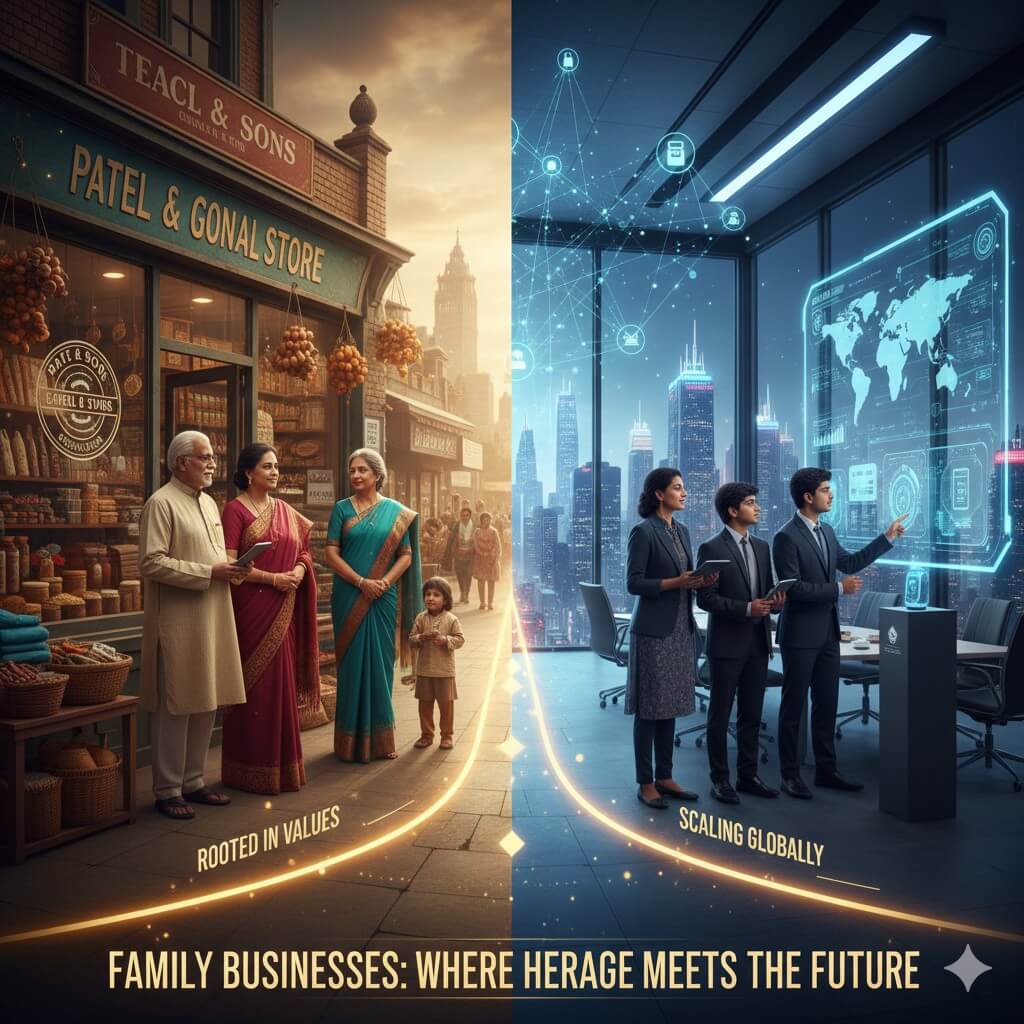
Globalisation has redefined the way economies function. With the rise of multinational corporations, cross-border trade, and advanced technology, businesses are no longer confined by geography. Yet, amid this vast interconnectedness, family businesses continue to hold a powerful and relevant place in the global economy. From small local shops to conglomerates like Walmart, Reliance, or BMW, family-owned enterprises remain a cornerstone of commerce, culture, and community.
Family Businesses: A Legacy Across Generations
Family businesses are enterprises owned, managed, or influenced by multiple generations of the same family. They are not just economic entities but also vessels of tradition, values, and identity. Unlike corporations run purely on profit motives, family businesses often combine economic aspirations with social and cultural responsibilities.
Their resilience is evident in their numbers. According to global studies, family firms make up nearly two-thirds of all businesses worldwide and contribute a significant share of employment and GDP. Clearly, despite the rapid expansion of globalisation, family businesses remain integral to the economic fabric.
Why Family Businesses Remain Relevant
Strong Core Values and Trust Family businesses thrive on a foundation of trust, loyalty, and shared values. These elements often translate into stronger customer relationships, ethical business practices, and a reputation that multinationals sometimes struggle to achieve. In a world where consumers increasingly value authenticity, family-owned enterprises offer a sense of personal connection.
Long-Term Vision Unlike corporations that are driven by quarterly profits, family businesses often think in terms of decades. The desire to pass the business on to the next generation pushes them toward sustainability, quality, and long-term reputation building. This vision helps them survive economic downturns and adapt to global changes with patience.
Adaptability to Local Cultures Family businesses are deeply rooted in local traditions and communities. While globalisation promotes standardisation, family businesses often tailor their offerings to reflect cultural preferences. This ability to merge tradition with modern demand makes them highly relevant in a diverse, interconnected world.
Employment and Community Development Family businesses are significant job creators. Beyond providing employment, many reinvest in their communities through philanthropy, infrastructure, and education. In developing economies especially, family enterprises play a vital role in uplifting local populations while staying competitive on the global stage.
Challenges in the Age of Globalisation
Despite their strengths, family businesses face unique challenges:
Succession Planning: Passing leadership from one generation to the next often sparks conflict. Global competition requires professional management, but many family firms hesitate to bring in external expertise.
Professionalisation: Informal structures that work at a local level may not scale globally. Family businesses must adopt modern governance and management practices to compete with multinational corporations.
Balancing Tradition with Innovation: The same traditions that give family businesses their strength can sometimes limit risk-taking or technological adoption. Globalisation demands agility, innovation, and digital integration.
Success Stories of Global Family Businesses
Numerous family businesses have not only survived globalisation but also thrived because of it. Take IKEA, founded by Ingvar Kamprad, which grew from a small Swedish business into a worldwide brand. Or Reliance Industries in India, which expanded under family leadership to become a global powerhouse in energy and telecommunications.
These examples prove that family ownership does not restrict growth. Instead, when combined with professional management and global vision, it can lead to enduring success.
The Road Ahead: Blending Legacy with Modernity
For family businesses to stay relevant in the global era, they must embrace a hybrid model—preserving their unique values while adopting modern practices. This includes:
Digital Transformation: Leveraging technology for efficiency, marketing, and global outreach.
Professional Governance: Incorporating outside expertise while keeping family influence intact.
Sustainability: Aligning with global concerns such as environmental responsibility and ethical labor practices.
Global Mindset: Expanding beyond borders while staying rooted in local heritage.
Conclusion
Family businesses are far from outdated in the age of globalisation. On the contrary, they remain deeply relevant because they provide what global corporations often lack—authenticity, continuity, and community trust. Their resilience lies in their ability to merge the wisdom of tradition with the demands of modernity.
As the world continues to integrate, family businesses that embrace innovation while holding onto their legacy will not only survive but also define the future of global commerce.